



2026 Conforming Loan Limits: What Tucson Homebuyers Need to Know
Sep 10, 2026By Derrick Polder • NMLS #207630 • Published: September 10, 2026 • Updated: September 16, 2026
Read article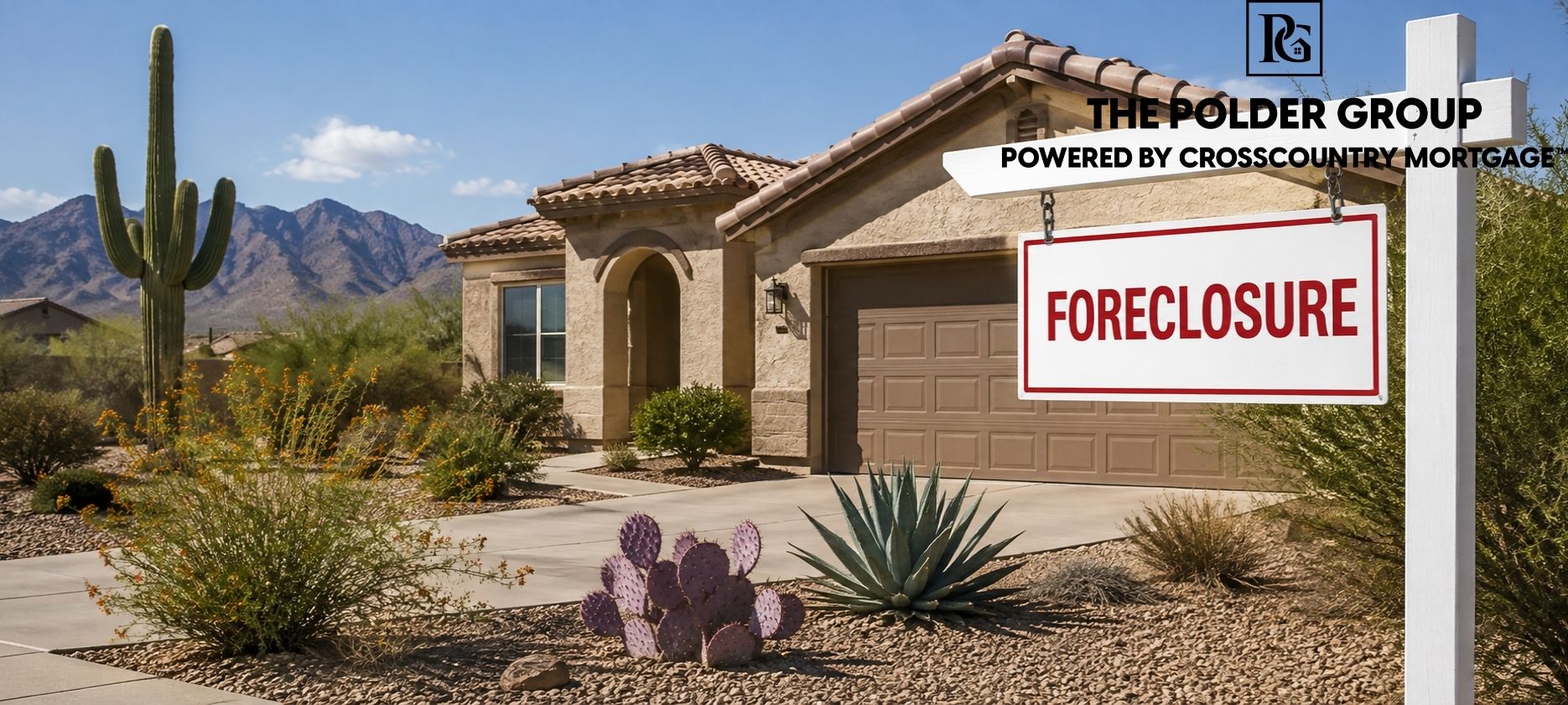
By Derrick Polder • NMLS #207630 • Published: July 7, 2026 • Updated: September 2, 2026
Buying a foreclosure can open up another avenue for finding a home, especially for buyers willing to consider properties that may need repairs or additional due diligence. But knowing how to buy a foreclosed home is important because these transactions can involve different timelines, property conditions, seller requirements, and financing challenges than a traditional home purchase.
For Tucson and Southern Arizona buyers, a foreclosure may range from a bank-owned home listed through the MLS to a property offered at auction. The way you buy—and potentially finance—the property depends heavily on where it is in the foreclosure process and its physical condition.
Before focusing on the listing price, understand what you're actually buying, what it could cost to make the home ready for occupancy, and whether your financing fits the property.
A foreclosure generally occurs after a homeowner falls behind on mortgage payments and the lender or other lienholder uses the applicable legal process to recover the property.
Not every property associated with foreclosure is at the same stage, however.
You may encounter terms such as:
For buyers using mortgage financing, an REO property listed for sale can often resemble a traditional home purchase more closely than an auction transaction.
Understanding the terminology—and the stage of foreclosure you're considering—is an important first step. Our loan terminology guide can also help you become familiar with common mortgage terms before starting your search.
Foreclosures sometimes attract buyers because of the possibility of purchasing a property at an appealing price. A lower asking price, however, does not automatically mean you're getting a better financial deal.
A foreclosure could provide:
Foreclosures can also involve:
The key question isn't simply, "Is this foreclosure cheap?"
A better question is: What will my total cost and risk look like after the purchase price, repairs, financing, closing costs, and other expenses are considered?
The foreclosure stage can dramatically change the buying experience.
During pre-foreclosure, you're generally purchasing from the existing homeowner rather than directly from a bank.
A short sale adds another layer because the homeowner's lender typically must approve a sale in which the proceeds will not fully satisfy the outstanding mortgage debt.
These transactions can take longer than traditional purchases, but buyers may have greater access to the property than they would with an auction.
Foreclosure auctions can move quickly and may have very different requirements from a standard home sale.
Depending on the sale, buyers could have limited or no opportunity to inspect the property beforehand. Payment requirements can also be considerably stricter, with cash or certified funds sometimes required on a short timeline.
That makes it especially important to understand the specific auction rules before bidding.
If a property does not sell through the foreclosure sale process, ownership may eventually transfer to the lender.
The lender can then market the property as an REO or bank-owned home.
For many buyers, this is the most approachable type of foreclosure purchase because the property may be marketed through a real estate agent and could allow time for financing, appraisal, title work, and inspections.
Although every transaction is different, these steps can help you prepare.
Think beyond the potential purchase price.
How comfortable are you with repairs? Can your schedule handle delays? Do you have funds available if an inspection uncovers problems?
Buyers needing a predictable move-in date or a turnkey property may prefer a traditional home purchase.
Before seriously shopping for a foreclosure, talk with a mortgage professional about your budget and potential loan options.
A mortgage pre-approval can help establish a realistic purchase range and provide documentation that a seller may request with your offer.
The Polder Group's homebuying resources can help you begin preparing for the financing side of your purchase.
Foreclosure transactions may include special contracts, bank addenda, deadlines, and property-specific requirements.
Consider working with a real estate agent familiar with REO properties, short sales, or foreclosure purchases in the market where you're buying.
Potential sources can include:
Always verify the property's status because online foreclosure information can change.
Don't base your decision on the asking price alone.
Consider anticipated costs for:
Before making an offer, try to develop a realistic picture of your total acquisition and repair budget.
Review comparable sales, property condition, estimated repairs, financing limitations, and your maximum comfortable budget.
An attractive list price shouldn't persuade you to exceed a purchase amount that makes sense for your finances.
An inspection can be especially valuable when a property has been vacant or poorly maintained.
Even when the seller won't make repairs, an inspection can help you understand what you're taking on.
Depending on the property, additional inspections for the roof, sewer, HVAC, pests, pool, mold, or structural components may also be appropriate.
Financed purchases generally require an appraisal.
Property condition can become particularly important because a home may need to satisfy applicable loan, appraisal, insurance, and program requirements.
Title work is also important. Foreclosed properties can potentially involve unpaid taxes, HOA obligations, liens, or other title-related concerns that should be evaluated as part of the transaction.
Once you're under contract, your mortgage team may need updated income, asset, insurance, or property documentation.
Following your lender's requests promptly can help keep the process moving. Our mortgage loan process explains the major stages borrowers can expect.
After the financing and closing requirements are satisfied, you'll sign the required documents and complete the purchase.
With a previously vacant property, consider changing locks and evaluating utilities, safety items, and urgent repairs soon after taking possession.
One of the biggest misconceptions about foreclosures is that they always require cash.
Some do—particularly certain auction purchases—but an eligible bank-owned or REO property may potentially be financed with a mortgage.
The right financing depends partly on the borrower's qualifications and partly on the property's condition.
You can review Polder Group mortgage loan programs to learn more about available financing categories.
A conventional mortgage may be an option for an eligible foreclosure or REO purchase.
Property condition still matters. Significant health, safety, structural, or habitability issues can affect appraisal and financing.
Government-backed financing may also be worth exploring for eligible borrowers and properties.
FHA, VA, and USDA programs have their own eligibility, appraisal, and property requirements. A foreclosure's condition can therefore determine whether a particular program is workable.
What if you've found a promising foreclosure that needs substantial work?
A renovation loan may provide a potential financing path for certain properties by incorporating eligible renovation expenses into the financing structure, subject to program guidelines, property eligibility, borrower qualification, and lender approval.
Learn more about renovation loan options if you're considering a fixer-upper or foreclosure requiring significant improvements.
Buying a foreclosed home in Tucson or elsewhere in Southern Arizona requires the same careful financial preparation as any home purchase, but local property characteristics can add another layer of due diligence.
Extended vacancy can be particularly important to investigate. Buyers should pay attention to the condition of cooling systems, plumbing, roofing, pools, landscaping, and other components that may deteriorate when a property has not been routinely occupied or maintained.
Arizona's heat also makes HVAC condition more than a cosmetic consideration. If an air-conditioning system requires substantial repair or replacement, that expense can materially change the economics of an otherwise attractive purchase.
Location matters, too. Tucson, Oro Valley, Marana, Sahuarita, Vail, Green Valley, and surrounding Southern Arizona communities are not interchangeable markets. Comparable sales, housing characteristics, HOA considerations, and property demand can vary by neighborhood and community.
Buyers considering properties across the region can review the Southern Arizona communities we serve.
The important point: evaluate a Tucson foreclosure as a complete property and financing decision—not simply as a discounted listing.
A strong foreclosure budget should account for more than your down payment.
Depending on your transaction, you may need funds for:
Some qualified homebuyers may also have access to assistance programs. Eligibility varies, so it's worth discussing whether down payment assistance programs could apply to your situation and the property you're considering.
Foreclosures can create opportunities, but buyers should enter the process with their eyes open.
Vacancy and deferred maintenance can result in problems that aren't obvious during an initial walkthrough.
Taxes, liens, HOA-related obligations, and other title matters should be carefully reviewed by the appropriate professionals.
Some properties may still be occupied. Buyers should understand the property's occupancy status and obtain appropriate professional or legal advice when necessary.
A property that looks attractive to a buyer may not satisfy the requirements of the proposed mortgage program.
That's one reason to involve your mortgage professional early instead of waiting until after you've made an offer.
Short sales, institutional sellers, foreclosure procedures, and property-related financing conditions can all affect how quickly a transaction moves.
If your current lease ends on a specific date or you need to relocate quickly, build flexibility into your plans.
A foreclosure could be worth considering if you're comfortable evaluating property condition, have financial room for unexpected expenses, and can tolerate a transaction that may be less predictable than a conventional purchase.
It may be less appropriate if you need a move-in-ready home, have limited repair reserves, or cannot accommodate delays.
There isn't one financing strategy that's right for every foreclosure—or every borrower. The property's condition, sale method, borrower qualifications, budget, and timing all need to work together.
If you're considering a foreclosed or bank-owned home in Tucson or Southern Arizona, contact The Polder Group's Tucson mortgage team before you make an offer. We can help you review potential financing options, understand how property condition could affect your mortgage, and prepare for the financing side of your home purchase.
Yes. Being a first-time homebuyer does not automatically prevent you from purchasing a foreclosed property. Your available financing will depend on factors including borrower eligibility, the type of foreclosure sale, the property's condition, and the requirements of the mortgage program you're considering.
Potentially. Bank-owned and REO homes may be eligible for mortgage financing when the borrower and property meet applicable requirements. Foreclosure auctions, however, may require cash or certified funds on a much shorter timeline.
Not necessarily. The down payment is generally determined by the mortgage program, borrower eligibility, property, and transaction—not simply because the home is a foreclosure. Auction purchases can have substantially different funding requirements.
An FHA loan may potentially be used for an eligible foreclosed property if the borrower, transaction, and property meet applicable FHA and lender requirements. Property condition can be particularly important when financing a foreclosure.
Yes, an eligible bank-owned or REO property may potentially be purchased using conventional financing. Significant property-condition problems can affect appraisal and loan approval, so discussing the property with your lender early is important.
When an inspection is permitted, a professional home inspection can provide valuable information about the property's condition. This can be especially important with a vacant or as-is home where deferred maintenance or damage may not be immediately visible.
A foreclosure may be listed at an attractive price, but buyers shouldn't assume every foreclosure is below market value or represents a bargain. Compare the property with relevant sales and account for repairs, closing expenses, financing, and other costs when evaluating its overall value.
Consider speaking with an experienced real estate agent and mortgage professional early. Review your financing, property condition, inspection opportunities, estimated repairs, comparable sales, title considerations, and the seller's specific requirements before deciding how much to offer.
This article is for educational purposes only and does not constitute financial or mortgage advice. Loan programs, rates, and guidelines may change at any time. All loans are subject to credit approval and underwriting. For guidance tailored to your situation, consult a licensed mortgage professional.
By Derrick Polder • NMLS #207630 • Published: September 10, 2026 • Updated: September 16, 2026
Read article
By Derrick Polder • NMLS #207630 • Published: August 31, 2026 • Updated: September 09, 2026
Read article
By Derrick Polder • NMLS #207630 • Published: August 20, 2026 • Updated: August 31, 2026
Read article
By Derrick Polder • NMLS #207630 • Published: August 3, 2026 • Updated: August 31, 2026
Read article






Different levels of commitment - all start with a conversation.

A quick first step to review loan options and next steps with a local expert.
Ready to move forward now? Secure application - Credit review required
Not ready for a form? Ask a question and a local expert will follow up.