



2026 Conforming Loan Limits: What Tucson Homebuyers Need to Know
Sep 10, 2026By Derrick Polder • NMLS #207630 • Published: September 10, 2026 • Updated: September 16, 2026
Read article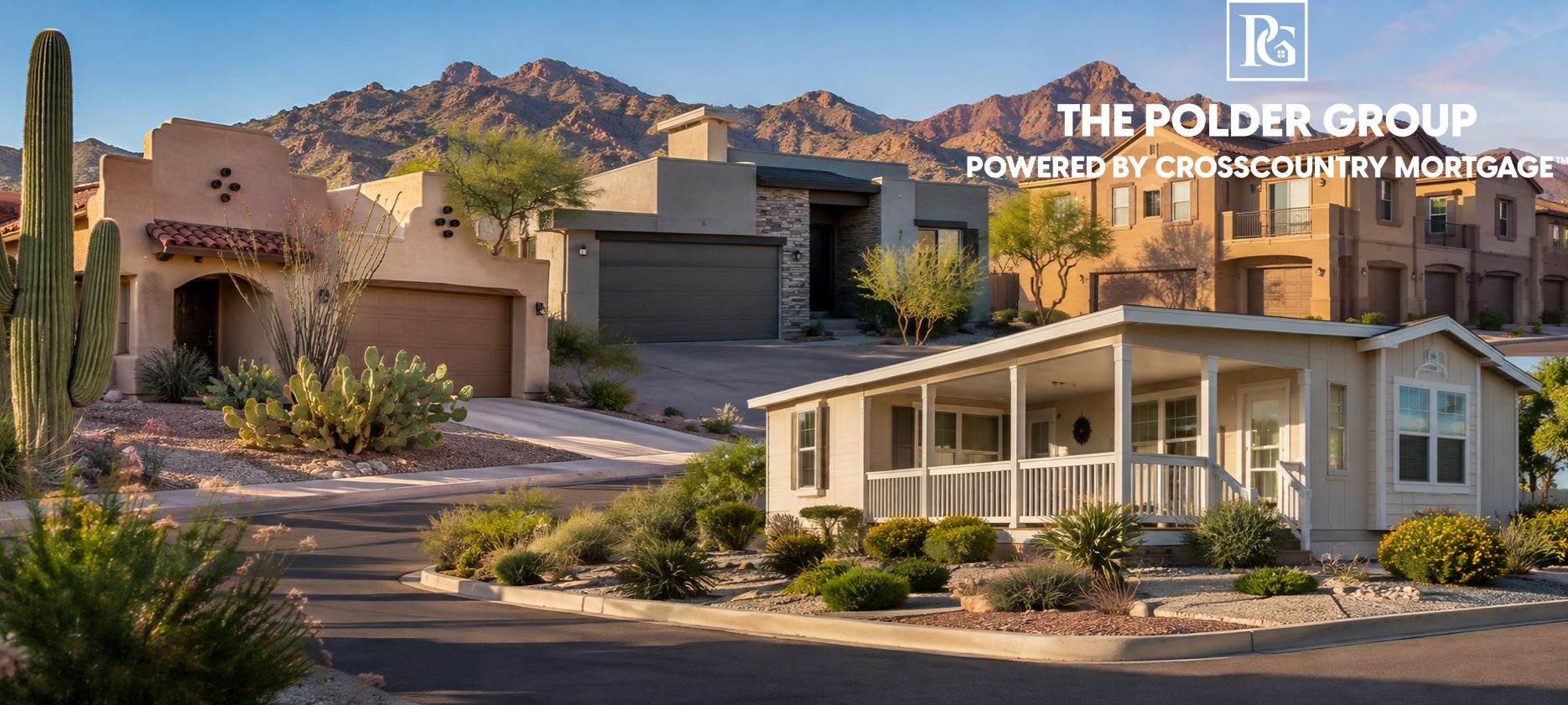
By Derrick Polder • NMLS #207630 • Published: June 15, 2026 • Updated: August 19, 2026
When you're shopping for a home, deciding how many bedrooms you need is only the beginning. Understanding the different types of homes in Tucson can help you compare properties based on lifestyle, maintenance, location, and potential financing requirements.
Southern Arizona offers an especially diverse mix. Depending on the neighborhood, buyers may encounter detached single-family homes, condos, townhomes, manufactured homes, ranch-style properties, contemporary designs, and homes influenced by Southwestern and Mediterranean architecture.
Before focusing on a particular style, it helps to understand an important distinction: a home's structure and its architectural style aren't the same thing.
A home's structural type describes what the property is and how it's built or owned. Its architectural style describes what it looks like.
For example, a property can be a single-family detached home structurally while featuring ranch, contemporary, Mediterranean, or Southwestern design elements.
That distinction matters for more than aesthetics. Property type can sometimes affect mortgage eligibility, insurance, appraisal requirements, HOA considerations, and other parts of the homebuying process.
Buyers who are beginning their search can review the Polder Group's homebuying resources and familiarize themselves with the mortgage loan process before making offers.
A single-family home is generally a detached residence designed for one household. Because it doesn't share walls with neighboring residences, it can provide more privacy and greater control over the property.
Depending on the community, buyers may also have a private yard, garage, patio, or other outdoor space.
The tradeoff is responsibility. Owners are generally responsible for the property's maintenance, landscaping, roof, exterior, and other repairs unless an HOA or another agreement covers specific items.
For Tucson buyers who value privacy and outdoor living, a detached home can be appealing—but it's important to budget for ownership costs beyond the monthly mortgage payment.
Townhomes typically have separate entrances and share one or more walls with neighboring residences. Many have multiple stories and may include a patio, courtyard, garage, or small outdoor area.
They can offer a middle ground between detached homes and condos.
Buyers should pay close attention to the property's legal classification and HOA documents. What looks like a townhome isn't necessarily financed the same way in every situation, so confirming the property's classification early can prevent surprises later in the mortgage process.
With a condominium, the buyer typically owns an individual unit while common areas are collectively managed under the condominium association.
That arrangement can appeal to buyers who prefer less exterior maintenance or want access to community amenities.
However, qualifying for condo financing can involve more than reviewing the borrower's finances. Depending on the loan program and project, the condominium itself may also need to satisfy applicable eligibility requirements.
Buyers should also include HOA dues in their housing budget rather than comparing properties based solely on purchase price.
Residential multi-family properties generally contain two or more separate housing units. For certain residential mortgage programs, properties with up to four units may qualify when program requirements are met.
This can appeal to buyers interested in occupying one unit while renting another.
Potential rental income may sometimes be considered during mortgage qualification, but the rules vary by loan program and borrower circumstances. Buyers should discuss the property and their plans with a knowledgeable mortgage professional before assuming rental income will qualify.
Manufactured housing can provide another path to homeownership in Arizona. These homes are built to federal HUD construction standards and transported to their location.
Financing a manufactured home can involve property-specific requirements related to factors such as the home's age, foundation, title, land ownership, condition, and loan program.
Polder Group provides additional information about manufactured home financing for borrowers considering this type of property.
Tiny homes and accessory dwelling units (ADUs) can serve very different purposes, even though both emphasize efficient use of space.
An ADU is typically an additional dwelling located on the same property as a primary residence. A tiny home may be a standalone residence, but its legal classification and financing options can depend heavily on how and where it is constructed.
Local zoning, permitting, utility, foundation, and property classification requirements can all matter. Buyers should verify these details with the appropriate local authorities and their lender before assuming a small dwelling will qualify for traditional mortgage financing.
Architecture influences a home's appearance, layout, energy use, maintenance needs, and overall character. Some styles are common nationally, while others are particularly well suited to the Southwest.
Ranch homes are commonly associated with single-story living, relatively open layouts, attached garages, and easy access to outdoor areas.
Their one-level design can appeal to families, retirees, and buyers who simply prefer to avoid stairs.
In Southern Arizona, ranch-style homes are especially worth recognizing because they can complement the region's emphasis on indoor-outdoor living.
Tucson's architectural identity deserves its own category.
Southwestern homes often incorporate stucco exteriors, earth-toned finishes, courtyards, covered patios, exposed wood elements, and design choices suited to the desert environment. Territorial-inspired homes may feature similar regional influences with distinctive parapets and simple geometric forms.
These characteristics can create the desert aesthetic many buyers associate with Tucson and Southern Arizona.
Stucco exteriors, tile roofs, arches, courtyards, and shaded outdoor areas are common characteristics of Mediterranean-inspired architecture.
These features translate naturally to warm climates and can be found throughout parts of the Southwest.
Mid-century modern architecture typically emphasizes clean lines, large windows, functional layouts, and connections between indoor and outdoor spaces.
For buyers considering an older mid-century property, condition can be as important as style. Electrical systems, plumbing, roofing, HVAC equipment, windows, and previous renovations are among the items buyers may want evaluated during their due diligence.
Contemporary homes emphasize current design ideas rather than one historic architectural period. Open spaces, large windows, simple forms, and modern materials are common.
Some newer homes may also incorporate energy-efficiency features that can be especially appealing in Southern Arizona's climate.
Craftsman architecture is known for visible craftsmanship, prominent porches, natural materials, exposed structural details, and built-in features.
Although associated with other parts of the country, Craftsman-inspired properties and design elements can still appear in Arizona neighborhoods.
Colonial, Cape Cod, Victorian, and Tudor homes represent recognizable American architectural traditions, but they're generally more closely associated with other regions of the country than with Southern Arizona.
Tucson buyers may still encounter homes incorporating elements of these styles. When evaluating an older or architecturally distinctive property, consider its condition and any potential renovation or maintenance needs—not simply its curb appeal.
Choosing among the different types of homes in Tucson means considering the realities of living in the Sonoran Desert as well as the property's design.
Features that might seem secondary elsewhere can become important in Tucson.
Consider the age and condition of the HVAC system, roofing materials, windows, insulation, shade, covered outdoor areas, and overall energy efficiency. Buyers may also want to understand the property's landscaping and irrigation needs.
Condos, townhomes, and many planned communities in Southern Arizona have homeowners associations.
Review not only the monthly or annual dues but also what those dues cover, community restrictions, insurance responsibilities, and any information available about assessments or association finances.
HOA dues may also affect mortgage qualification because they're generally included when calculating a borrower's monthly housing obligations.
"Tucson" can describe a broad housing market.
Your options may look different depending on whether you're considering central Tucson, Oro Valley, Marana, Sahuarita, Vail, Green Valley, or another Southern Arizona community.
Explore the Polder Group's Southern Arizona areas served as you compare locations.
Two homes with similar prices can present very different mortgage scenarios.
A detached single-family home, condo, manufactured home, and multi-unit property can each have different eligibility or documentation considerations. The home's condition may also matter for certain loan programs.
Understanding the property type early can help you identify appropriate mortgage loan programs.
The best home isn't necessarily the largest, newest, or most visually impressive one. It's the property that makes sense for your finances, lifestyle, and plans.
Here are several factors worth considering.
Look beyond the purchase price.
Your potential housing expenses can include principal and interest, property taxes, homeowners insurance, mortgage insurance when applicable, HOA dues, utilities, and maintenance.
You can use Polder Group's mortgage calculators to explore different scenarios. Calculator results are estimates and aren't a commitment to lend or a substitute for an individualized mortgage review.
How much property do you realistically want to maintain?
A detached home with a yard may offer more privacy and flexibility but usually puts more maintenance responsibility on the homeowner. A condo may reduce certain exterior responsibilities while adding association dues and rules.
Neither is inherently better. The right choice depends on your priorities.
Think beyond your immediate needs.
Do you work from home? Want outdoor space? Need a single-story layout? Expect your household to change? Want a lock-and-leave property?
Answering those questions can narrow the search much faster than choosing a home based only on architectural style.
Consider how long you expect the property to meet your needs, while recognizing that circumstances and housing markets can change.
Rather than assuming a particular home type will appreciate at a certain rate, focus on factors you can evaluate today: affordability, condition, location, functionality, ownership costs, and compatibility with your plans.
The property you're buying can influence which mortgage programs may be available.
A detached single-family residence will often fit standard conventional or government-backed program guidelines when the borrower and property meet applicable requirements. Other property types may involve additional considerations.
For example, condo financing can require review of the condominium project. Manufactured homes can have specific construction, foundation, title, and property requirements. Multi-unit properties may have different down payment, occupancy, reserve, or rental-income guidelines depending on the program.
Potential options may include:
The right option depends on much more than the home's style. Credit profile, income, assets, debts, occupancy, property classification, location, and individual program guidelines can all affect eligibility.
That's why it's useful to discuss financing before becoming committed to a particular property.
If you're exploring different types of homes in Tucson or elsewhere in Southern Arizona, contact the Polder Group mortgage team. We can help you review potential mortgage options for your financial situation and the type of property you're considering, so you can approach your home search with a clearer understanding of the financing side of the equation.
Tucson's housing market includes detached single-family homes, condos, townhomes, manufactured homes, and multi-unit properties. Buyers can also encounter ranch, Southwestern, Territorial-influenced, Mediterranean, mid-century modern, and contemporary architectural styles.
Ranch-style and Southwestern-influenced homes are strongly associated with Southern Arizona. Stucco exteriors, tile roofs, courtyards, covered patios, and other desert-oriented design elements are also common throughout the region.
It can. Property classification, condition, occupancy, construction method, and other factors can affect loan eligibility. Condos, manufactured homes, and multi-unit properties may have additional requirements depending on the mortgage program.
FHA financing may be available for qualifying owner-occupied properties containing up to four units, subject to FHA and lender requirements. Borrowers should confirm current eligibility and underwriting requirements for the specific property.
Some manufactured homes can qualify for conventional, FHA, VA, or USDA financing when applicable borrower, property, construction, foundation, title, and program requirements are satisfied. Eligibility should be evaluated for the individual property.
Yes. HOA dues can increase the ongoing cost of owning a condo, townhome, or property in a planned community and may be included in mortgage qualification calculations. Buyers should understand both the cost and what the association provides.
In addition to a professional home inspection and other appropriate due diligence, buyers may want to pay particular attention to major systems and components such as roofing, HVAC, plumbing, electrical systems, windows, insulation, and previous renovations.
Mortgage eligibility depends on both the borrower and property. Speaking with a mortgage professional early can help you understand which programs may be appropriate before you make an offer.
This article is for educational purposes only and does not constitute financial or mortgage advice. Loan programs, rates, and guidelines may change at any time. All loans are subject to credit approval and underwriting. For guidance tailored to your situation, consult a licensed mortgage professional.
By Derrick Polder • NMLS #207630 • Published: September 10, 2026 • Updated: September 16, 2026
Read article
By Derrick Polder • NMLS #207630 • Published: August 31, 2026 • Updated: September 09, 2026
Read article
By Derrick Polder • NMLS #207630 • Published: August 20, 2026 • Updated: August 31, 2026
Read article
By Derrick Polder • NMLS #207630 • Published: August 3, 2026 • Updated: August 31, 2026
Read article






Different levels of commitment - all start with a conversation.

A quick first step to review loan options and next steps with a local expert.
Ready to move forward now? Secure application - Credit review required
Not ready for a form? Ask a question and a local expert will follow up.