



2026 Conforming Loan Limits: What Tucson Homebuyers Need to Know
Sep 10, 2026By Derrick Polder • NMLS #207630 • Published: September 10, 2026 • Updated: September 16, 2026
Read article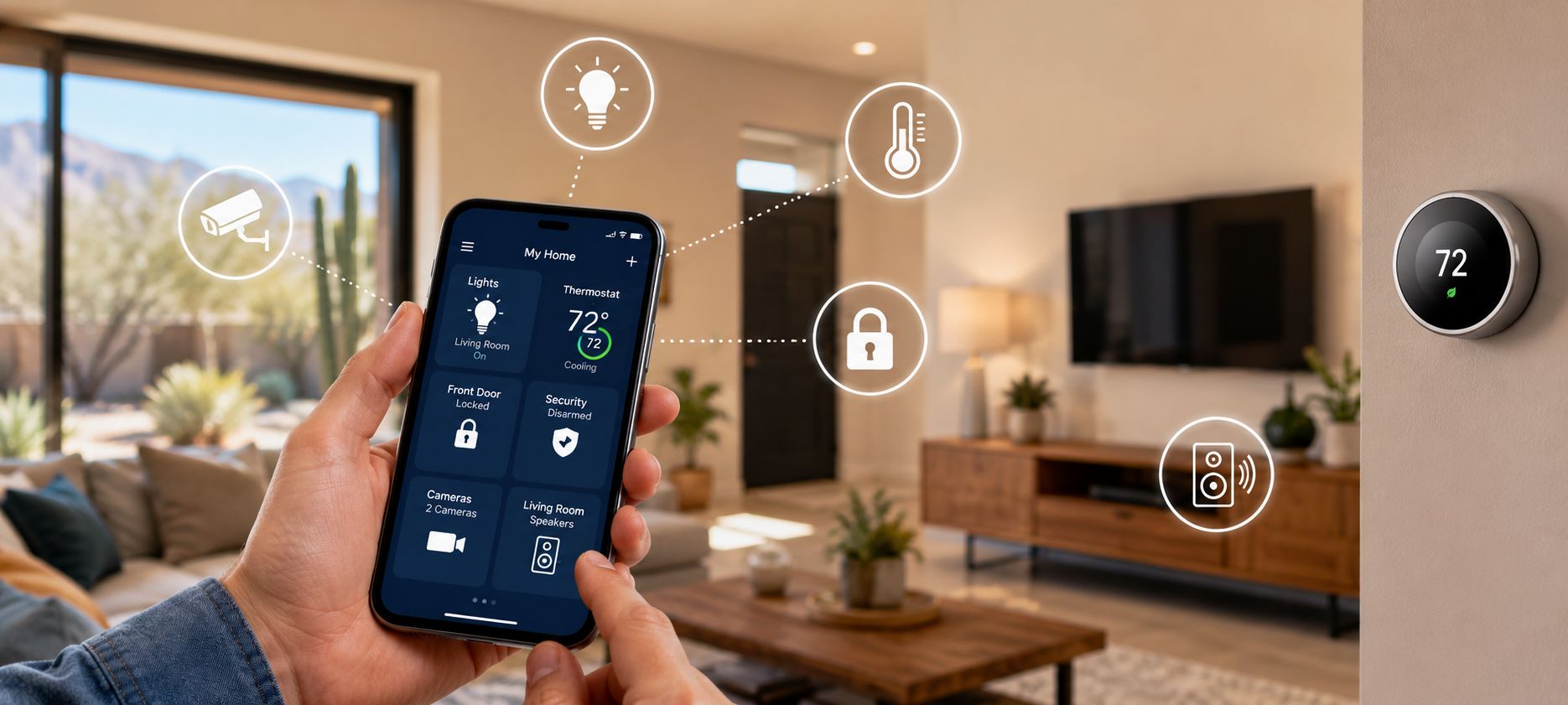
Discover how smart home technology can improve convenience, security, energy efficiency, and everyday living for homeowners in Tucson and Southern Arizona.
Smart home technology is changing the way homeowners interact with their homes. From adjusting the thermostat with your phone to receiving alerts when someone approaches your front door, smart devices offer convenience, security, and greater control over daily life.
As more homebuyers look for modern features, understanding what makes a home “smart” can help you decide whether these upgrades fit your lifestyle and long-term homeownership goals.
A smart home is a residence equipped with internet-connected devices that can communicate with one another and be controlled remotely through a smartphone, tablet, voice assistant, or centralized hub.
These devices can automate routine tasks, improve energy efficiency, and enhance home security. Depending on your preferences, a smart home can include just a few connected devices or an extensive network of integrated systems.
Common examples include:
There is no official standard for how many devices a home must have to be considered a smart home. The level of technology is entirely customizable.
Smart homes operate through three primary components:
Connected devices communicate through your home's Wi-Fi network. These products collect information, respond to commands, and can often automate tasks based on schedules or routines.
Examples include:
Many devices can also provide notifications directly to your smartphone, allowing you to monitor and manage your home from virtually anywhere.
A reliable internet connection serves as the backbone of most smart home systems. Devices use the connection to communicate with cloud services, mobile apps, and one another.
Without a stable connection, many smart features may not function properly.
Many homeowners use platforms such as Amazon Alexa, Google Home, or Apple HomeKit to control multiple devices from a single location.
These systems allow users to:
For example, a homeowner can create a routine that locks doors, turns off lights, and adjusts the thermostat automatically every night before bed.
One of the biggest advantages of smart home technology is flexibility. Homeowners can start small and gradually expand their systems over time.
Smart speakers often serve as the command center for a connected home.
In addition to controlling other devices, they can:
Before purchasing a speaker, make sure it is compatible with any devices you already own.
Smart lighting systems allow homeowners to:
Many systems can automatically turn lights on or off based on occupancy or time of day.
Smart thermostats learn usage patterns and adjust temperatures automatically to maximize comfort and efficiency.
Potential benefits include:
Security-focused smart devices continue to be among the most popular home technology upgrades.
Common options include:
These tools allow homeowners to monitor activity in real time and receive instant alerts when something requires attention.
Homeowners can control many aspects of their home through a smartphone app or voice command. Everyday tasks become faster and more efficient.
Smart thermostats and lighting systems can reduce unnecessary energy consumption by automatically adjusting usage based on occupancy and schedules.
Smart security devices provide additional awareness and control, whether you're at home or traveling.
Smart homes can be customized around your routines and preferences. Automated schedules help create a living environment tailored to your lifestyle.
Connected technology can be particularly helpful for individuals with mobility limitations by reducing the need for physical interaction with devices.
For homeowners in Tucson and Southern Arizona, smart home technology can offer unique advantages.
The region's hot summers make smart thermostats especially valuable for managing cooling costs and maintaining comfort. Automated irrigation systems can also help homeowners monitor water usage more efficiently in desert landscapes.
Security features such as smart cameras and video doorbells may provide additional peace of mind for homeowners who travel frequently or own seasonal properties.
While smart technology can be an attractive feature, buyers should focus first on finding the right home and financing solution. Smart devices are often relatively affordable upgrades that can be added after closing.
If you're exploring homeownership in Southern Arizona, understanding your financing options is just as important as choosing the right home features.
Learn more about:
Smart home features can make a property more attractive to buyers, especially among younger generations who value technology and convenience.
However, smart devices do not always produce a direct dollar-for-dollar increase in appraised value.
Features that buyers commonly appreciate include:
Rather than viewing smart technology as a major value-adding renovation, homeowners should consider it a lifestyle enhancement that may improve marketability when it's time to sell.
Not all devices work together seamlessly. Selecting a preferred platform first can simplify setup and future expansion.
Technology should make life easier, not more complicated. Choose products that fit your comfort level and technical experience.
Since smart devices connect to the internet, protecting your network is essential.
Best practices include:
Some devices are inexpensive, while others require larger upfront investments.
Homeowners should also account for:
A smart home isn't about having the latest gadgets—it's about creating a living environment that supports your daily life.
Whether you're interested in lowering energy costs, improving security, or simply making everyday tasks more convenient, smart home technology offers flexible solutions that can grow with your needs.
If you're preparing to buy a home in Tucson or Southern Arizona, The Polder Group can help you explore mortgage options that fit your goals. Our team is committed to helping homebuyers make informed decisions every step of the way. Contact us today to learn more about financing your next home and creating a homeownership plan that works for you.
A smart home is a residence equipped with internet-connected devices that can be controlled remotely and often communicate with one another through a centralized system or app.
Popular smart home devices include smart thermostats, smart locks, security cameras, video doorbells, smart lighting systems, and smart speakers.
Yes. Devices such as smart thermostats and smart lighting systems may help reduce energy consumption and lower utility costs by automating usage.
Smart home features can make a home more appealing to buyers, although they do not always directly increase appraised value.
Smart homes can be secure when homeowners use strong passwords, enable two-factor authentication, keep devices updated, and maintain a secure Wi-Fi network.
Many first-time homebuyers find smart devices beneficial because they improve convenience, security, and energy efficiency without requiring major renovations.
Many homeowners begin with a smart speaker, thermostat, or video doorbell because these devices offer immediate benefits and are relatively easy to install.
This article is for educational purposes only and does not constitute financial or mortgage advice. Loan programs, rates, and guidelines may change at any time. All loans are subject to credit approval and underwriting. For guidance tailored to your situation, consult a licensed mortgage professional.
By Derrick Polder • NMLS #207630 • Published: September 10, 2026 • Updated: September 16, 2026
Read article
By Derrick Polder • NMLS #207630 • Published: August 31, 2026 • Updated: September 09, 2026
Read article
By Derrick Polder • NMLS #207630 • Published: August 20, 2026 • Updated: August 31, 2026
Read article
By Derrick Polder • NMLS #207630 • Published: August 3, 2026 • Updated: August 31, 2026
Read article






Different levels of commitment - all start with a conversation.

A quick first step to review loan options and next steps with a local expert.
Ready to move forward now? Secure application - Credit review required
Not ready for a form? Ask a question and a local expert will follow up.