Tucson, Arizona Homebuying & Mortgage Guide | The Polder Group
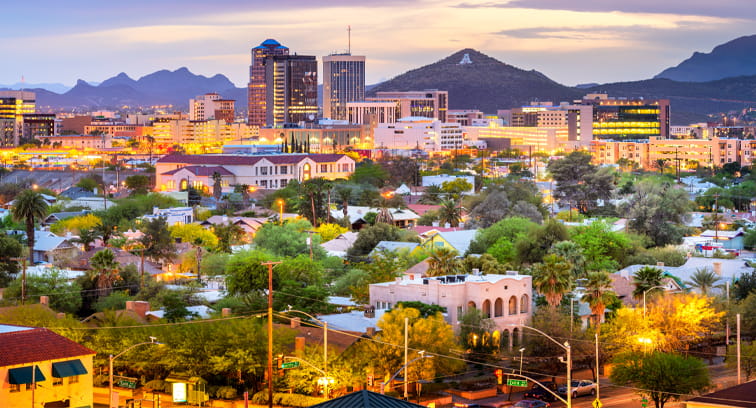
Embracing Tucson - The Old Pueblo


Why Tucson Homebuyers Choose The Polder Group
The Polder Group at CrossCountry Mortgage is a Tucson-based mortgage team helping homebuyers throughout Southern Arizona navigate local real estate markets and financing options with confidence.
From Tucson and Oro Valley to Marana, Vail, Sahuarita, and beyond, we help buyers understand neighborhoods, market trends, school districts, property taxes, and mortgage solutions so they can make informed homeownership decisions. Whether you're buying your first home, relocating, upgrading, downsizing, or refinancing, our team provides local guidance backed by national lending resources.
Tucson Quick Facts
Population: 548,013 residents (2025 estimate)
Median Home Price: $324,946
County: Pima County
Median Age: 39.8 years
Major Employers:
- University of Arizona
- Raytheon
- Davis-Monthan Air Force Base
- Banner Health
- Tucson Medical Center
Known For:
- Year-round sunshine
- Outdoor recreation and hiking
- University of Arizona
- Aerospace and defense industries
- Relatively affordable housing compared to many Western cities
Homebuyer Snapshot:
Tucson attracts first-time buyers, military families, retirees, professionals, and remote workers looking for affordability, outdoor living, and diverse housing options throughout Southern Arizona.
Popular Tucson Communities
Oro Valley
Known for master-planned communities, golf courses, and mountain views.
Marana
Fast-growing area with newer construction and family-friendly neighborhoods.
Vail
Popular for highly rated schools and newer developments.
Sahuarita
Affordable housing options with strong community amenities.
Catalina Foothills
Luxury homes, mountain views, and upscale neighborhoods.
Real Estate & Lifestyle Overview
Tucson is a vibrant desert city known for its affordability, abundance of outdoor recreation, university-town energy, and a diverse employment base that includes military, aerospace, and healthcare sectors. The city is renowned for the University of Arizona, Saguaro National Park, Davis-Monthan Air Force Base, its robust aerospace and defense industries, and a thriving food and arts scene.
What Is Tucson, Arizona, Known For?
Tucson is Southern Arizona's largest city, known for its outdoor recreation, University of Arizona, aerospace industry, year-round sunshine, and relatively affordable housing compared to many major Western cities.
Is Tucson A Good Place To Buy A Home?
Many homebuyers choose Tucson because of its affordability, strong employment sectors, outdoor lifestyle, and diverse housing options.Buyers can explore FHA, VA, USDA, conventional, jumbo, and down payment assistance programs depending on their financial goals and eligibility.
Buying a Home in Tucson
Tucson offers a wide range of housing options, from historic central neighborhoods and university-adjacent communities to newer master-planned developments in Oro Valley, Marana, Vail, and Sahuarita. Homebuyers can explore conventional, FHA, VA, USDA, jumbo, and down payment assistance programs depending on their goals and eligibility.
The Polder Group at CrossCountry Mortgage helps Tucson buyers compare financing options, understand local market conditions, and build a homeownership strategy that fits their needs.
Mortgage Programs Popular in Tucson
Tucson Mortgage Market Snapshot
Homebuyers in Tucson can access a wide range of financing options depending on credit profile, down payment, military eligibility, property type, and income qualifications.
Popular loan programs include:
• FHA loans for flexible qualification requirements
• VA loans for eligible veterans and active-duty military
• USDA loans in qualifying rural areas around Tucson
• Conventional loans for buyers seeking competitive financing options
• Jumbo loans for higher-priced properties
• Down payment assistance programs for eligible Arizona buyers
The Polder Group at CrossCountry Mortgage helps Tucson buyers compare programs and build a financing strategy based on their goals.
Educational Landscape
The Tucson area is primarily served by the Tucson Unified School District, with additional coverage by districts such as Amphitheater Unified, Flowing Wells, Sunnyside, Vail, Catalina Foothills, and others. Pima County encompasses multiple public school districts, providing educational options throughout the region. (Pima Schools)
Academic performance within Tucson Unified is mixed. According to Niche, about 22% of TUSD students are proficient in math and 28% in reading, which is lower than some suburban districts and high-achieving magnet or charter schools. (Niche)
Higher education is a notable strength in Tucson. The University of Arizona, located in the city, enrolled 54,384 students in fall 2025, with 43,294 undergraduates and 11,090 graduate students. (University of Arizona News)
Safety & Neighborhood Considerations
Neighborhood conditions vary throughout Tucson. Buyers should evaluate individual communities based on schools, amenities, commute times, and local market conditions rather than relying solely on citywide statistics.
Population Growth
The Tucson metropolitan area reached approximately 1,086,634 residents in 2024, growing 0.6% that year. The area’s steady growth is driven by affordability, retirees, students, military presence, healthcare, aerospace, remote workers, and lifestyle migration. (MAP AZ Dashboard)
Employment & Career Opportunities
Tucson’s economy is supported by sectors such as aerospace and defense, healthcare, education, government, logistics, advanced manufacturing, optics/photonics, and technology. Major employers include the University of Arizona, Raytheon Missile Systems, Banner University Medical Center, Davis-Monthan Air Force Base, Pima County, Amazon, FedEx, and the State of Arizona. (MilitaryINSTALLATIONS)
The area is often referred to as “Optics Valley” due to its significant concentration of optics, photonics, astronomy, and research activities connected to the University of Arizona and local observatories. (Tech Parks Arizona)
Statewide job growth in Arizona slowed in 2025, with Tucson’s job growth revised to around 0.1%. While the outlook is stable rather than booming, healthcare, aerospace/defense, education, logistics, small business, tourism, and professional services continue to offer solid opportunities. (Arizona’s Economy)
Entertainment & Lifestyle
Tucson offers a rich outdoor and cultural lifestyle. Notable attractions include Saguaro National Park, Sabino Canyon, Mt. Lemmon, the Arizona-Sonora Desert Museum, Pima Air & Space Museum, Mission San Xavier del Bac, downtown Tucson, Fourth Avenue, and the University of Arizona’s cultural offerings.
Saguaro National Park, located on both the east and west sides of Tucson, protects the iconic saguaro cactus—a symbol of the American Southwest. (National Park Service)
The Arizona-Sonora Desert Museum is a unique combination of zoo, botanical garden, natural history museum, aquarium, and art gallery. (Arizona-Sonora Desert Museum)
Tucson boasts a robust calendar of events, including festivals, live music, cultural celebrations, seasonal activities, and community gatherings. According to Visit Tucson, the city is recognized as an official World Festival and Event City. (Visit Tucson)
Downtown Tucson features dining, bars, shopping, arts, entertainment, and vibrant nightlife, while the surrounding region offers hiking, biking, golf, desert photography, stargazing, and scenic drives. (Visit Tucson)
Who Buys Homes in Tucson?
- First-time buyers
- Military families
- University employees
- Retirees
- Relocating professionals
- Investors
Footnotes / Sources
Primary sources used include Zillow, Redfin, U.S. Census Bureau QuickFacts, NeighborhoodScout, University of Arizona MAP Dashboard, Arizona Department of Education/School Report Cards, Niche, Pima County Schools, University of Arizona enrollment data, BLS/Arizona economic data, Visit Tucson, National Park Service, Arizona-Sonora Desert Museum, and Downtown Tucson.
FAQs.
-
What credit score do I need to buy a home in Tucson?
Many Tucson homebuyers can qualify with a credit score as low as 580 for FHA financing, while most conventional loan programs typically require a minimum score of 620. Some loan programs may have different requirements depending on the borrower's financial profile, down payment, and loan type. Higher credit scores often help borrowers qualify for lower interest rates and better loan terms.
-
Are there down payment assistance programs available in Tucson?
Yes. Eligible Tucson homebuyers may qualify for down payment assistance programs that can help cover some or all of their down payment and, in some cases, closing costs. Programs such as Home Plus, Pima Tucson Homebuyers Solution, CCM Smart Start, Chenoa Fund, and other Arizona assistance programs may be available depending on income, credit profile, property location, and loan type. Both first-time and some repeat homebuyers may qualify.
-
Is Tucson a good market for first-time homebuyers?
Yes. Tucson remains one of the more affordable housing markets in the Southwest compared to many major metropolitan areas. First-time homebuyers have access to FHA loans, Conventional low-down-payment programs, VA loans for eligible veterans, USDA financing in qualifying areas, and various Arizona down payment assistance programs. Tucson's diverse housing options, strong employment base, and relatively affordable home prices continue to attract first-time buyers throughout Southern Arizona.
-
Can I use a VA loan in Tucson?
Yes. Eligible veterans, active-duty service members, and certain surviving spouses can use VA loans to purchase homes throughout Tucson and Southern Arizona. VA loans offer benefits such as no required down payment, no monthly mortgage insurance, competitive interest rates, and flexible qualification guidelines for eligible borrowers. Tucson's strong military presence, including Davis-Monthan Air Force Base, makes VA financing one of the area's most popular loan programs.
-
What are closing costs in Arizona?
Closing costs in Arizona typically range from 2% to 5% of the home's purchase price, although actual costs vary based on loan type, property taxes, homeowner's insurance, lender fees, and other transaction-specific factors. Some buyers may qualify for lender credits, seller concessions, or down payment assistance programs that help reduce upfront costs.
-
How long does it take to close on a home in Tucson?
Most Tucson home purchases close within 30 to 45 days, although timelines can vary based on the loan program, appraisal requirements, title work, and documentation needed during underwriting. Some transactions may close faster, while more complex loans can require additional time.
-
How much money do I need to buy a home in Tucson?
Many Tucson homebuyers purchase a home with less money out of pocket than they expect. Depending on the loan program, qualified buyers may be eligible for 3% down Conventional financing, 3.5% down FHA financing, 0% down VA loans, 0% down USDA loans, or Arizona down payment assistance programs that help reduce upfront costs. The amount needed varies based on the purchase price, loan type, and available assistance programs.


- Over 4,500 Five-Star Reviews
- 1,200+ Google Reviews
- 3,300+ Experience.com Reviews