



2026 Conforming Loan Limits: What Tucson Homebuyers Need to Know
Sep 10, 2026By Derrick Polder • NMLS #207630 • Published: September 10, 2026 • Updated: September 16, 2026
Read article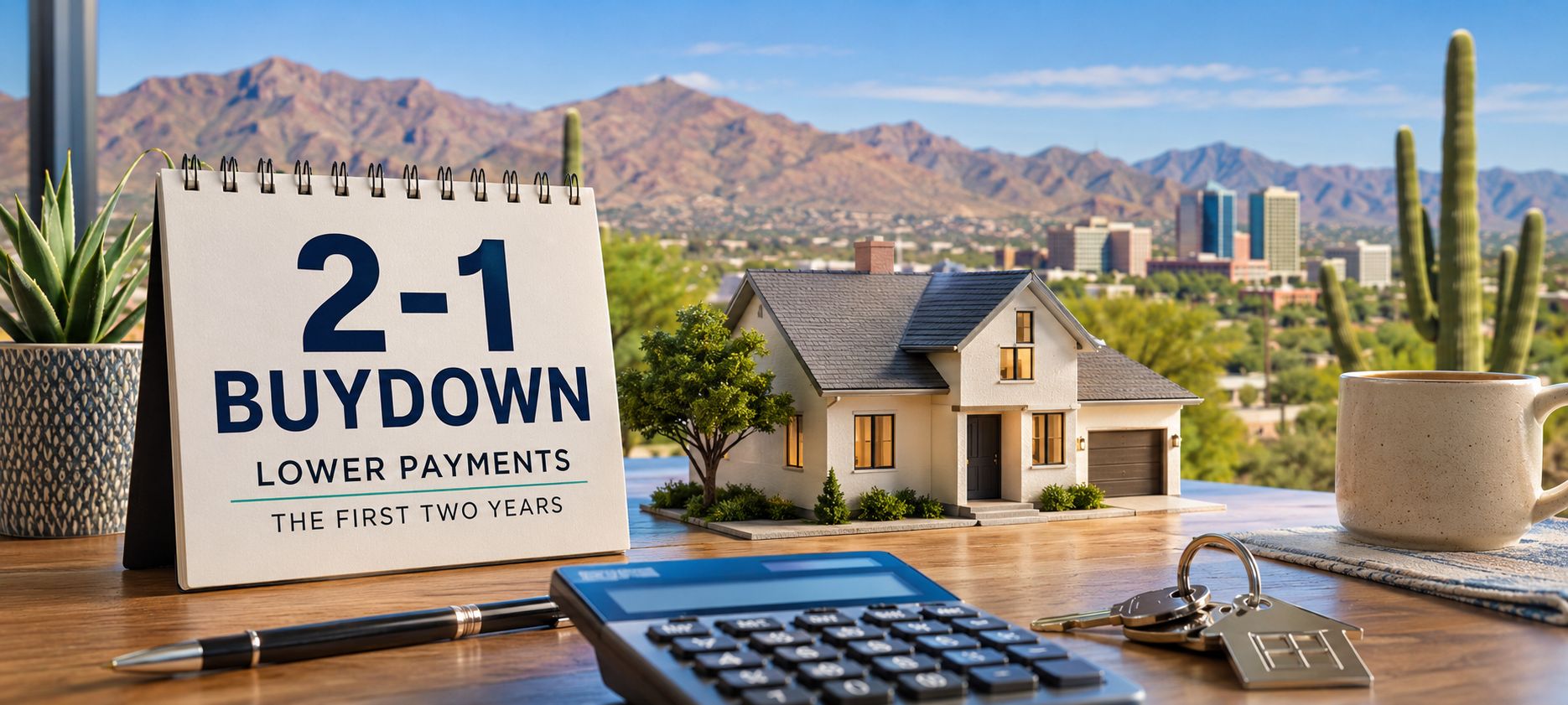
Learn how a 2-1 buydown can reduce your monthly mortgage payment during the first two years of homeownership and help make buying a home more affordable.
If you're planning to buy a home and are concerned about today's mortgage rates, a 2-1 buydown may offer a valuable solution. This financing strategy temporarily reduces your interest rate during the first two years of your mortgage, resulting in lower monthly payments while you settle into homeownership.
A 2-1 buydown can be especially attractive for buyers who expect their income to increase over time or who anticipate refinancing if interest rates improve in the future.
A 2-1 buydown is a temporary interest rate reduction applied during the first two years of your mortgage loan.
Here's how it typically works:
The temporary payment reduction is usually funded by the home seller, builder, or another approved interested party as part of the purchase agreement. The funds are deposited into an escrow account at closing and used to subsidize the difference between the reduced payment and the full payment.
Because the loan is qualified at the full note rate, borrowers must still demonstrate they can afford the long-term payment.
Let's assume the following:
Approximate principal and interest payments:
| Year | Interest Rate | Monthly Payment |
|---|---|---|
| Year 1 | 5.00% | $1,933 |
| Year 2 | 6.00% | $2,158 |
| Year 3+ | 7.00% | $2,395 |
This example demonstrates how a temporary buydown can provide meaningful payment relief during the first two years of homeownership.
Actual payments will vary based on taxes, insurance, loan program, and individual borrower qualifications.
One of the biggest advantages is reduced monthly housing expenses during the first two years. This can help buyers manage moving costs, home improvements, furnishings, and other expenses associated with purchasing a home.
Lower initial payments may help some borrowers feel more comfortable purchasing a home now rather than waiting for rates to change.
In a balanced or buyer-friendly market, sellers may be willing to contribute toward a buydown instead of reducing the purchase price. This can create a win-win scenario for both parties.
Some buyers use a 2-1 buydown as a bridge strategy, planning to refinance if market rates decline before the temporary reduction expires.
While the savings can be substantial in the first two years, it's important to remember that the payment reduction is temporary.
Before moving forward, ask yourself:
Understanding your future budget is just as important as enjoying the short-term savings.
A temporary buydown and a permanent rate buydown serve different purposes.
The right option depends on your financial goals, available funds, and expectations regarding future interest rates.
Southern Arizona's housing market continues to present opportunities for buyers who understand the financing tools available to them.
A 2-1 buydown can be particularly useful for Tucson-area buyers purchasing new construction homes, relocating to Southern Arizona, or entering the market while rates remain elevated.
Many builders and sellers may be willing to offer concessions that can be applied toward temporary buydowns. Working with an experienced mortgage professional can help you evaluate whether this strategy aligns with your long-term financial goals.
At The Polder Group, we help homebuyers compare loan options, understand payment scenarios, and determine whether a temporary buydown, permanent rate reduction, or another financing solution is the best fit.
Every homebuyer's situation is unique. Whether you're purchasing your first home, moving up, or relocating to Southern Arizona, understanding your financing choices can help you make a confident decision.
Review available loan options, payment scenarios, and mortgage programs before making your final choice.
A 2-1 buydown temporarily reduces your interest rate by 2% during the first year and 1% during the second year before returning to the full note rate in year three.
The cost is often paid by the seller, builder, or another approved interested party as part of a negotiated purchase agreement.
Yes. Lenders generally qualify borrowers using the full note rate, not the reduced introductory payment.
Many loan programs may allow temporary buydowns, including conventional, FHA, VA, and USDA financing, subject to current program guidelines.
That depends on your financial situation, housing needs, and future plans. A mortgage professional can help you compare the costs and benefits of buying now versus waiting.
Interested in learning whether a 2-1 buydown could help make your next home purchase more affordable?
Contact The Polder Group today to review your financing options, compare payment scenarios, and determine the mortgage strategy that best fits your goals.
https://www.thepoldergroup.com/contact-tucson-mortgage-team
This article is for educational purposes only and does not constitute financial or mortgage advice. Loan programs, rates, and guidelines may change at any time. All loans are subject to credit approval and underwriting. For guidance tailored to your situation, consult a licensed mortgage professional.
By Derrick Polder • NMLS #207630 • Published: September 10, 2026 • Updated: September 16, 2026
Read article
By Derrick Polder • NMLS #207630 • Published: August 31, 2026 • Updated: September 09, 2026
Read article
By Derrick Polder • NMLS #207630 • Published: August 20, 2026 • Updated: August 31, 2026
Read article
By Derrick Polder • NMLS #207630 • Published: August 3, 2026 • Updated: August 31, 2026
Read article






Different levels of commitment - all start with a conversation.

A quick first step to review loan options and next steps with a local expert.
Ready to move forward now? Secure application - Credit review required
Not ready for a form? Ask a question and a local expert will follow up.